Silver bromide made photography possible. Write its formula and the charge logic.
Ag+ and Br- pair one-to-one: AgBr. Light kicks an electron from Br- to Ag+, seeding metallic silver specks — the latent image a developer then amplifies.
Bromine commonly forms Br- Br+ Br5+ in introductory ionic compounds.
| Element | Bromine |
|---|---|
| Symbol | Br |
| Atomic number | 35 |
| Common ionic charge | -1, +1, +5 |
| Common ions | Br-, Br+, Br5+ |
Images are used as visual references; charge rules still depend on the compound.
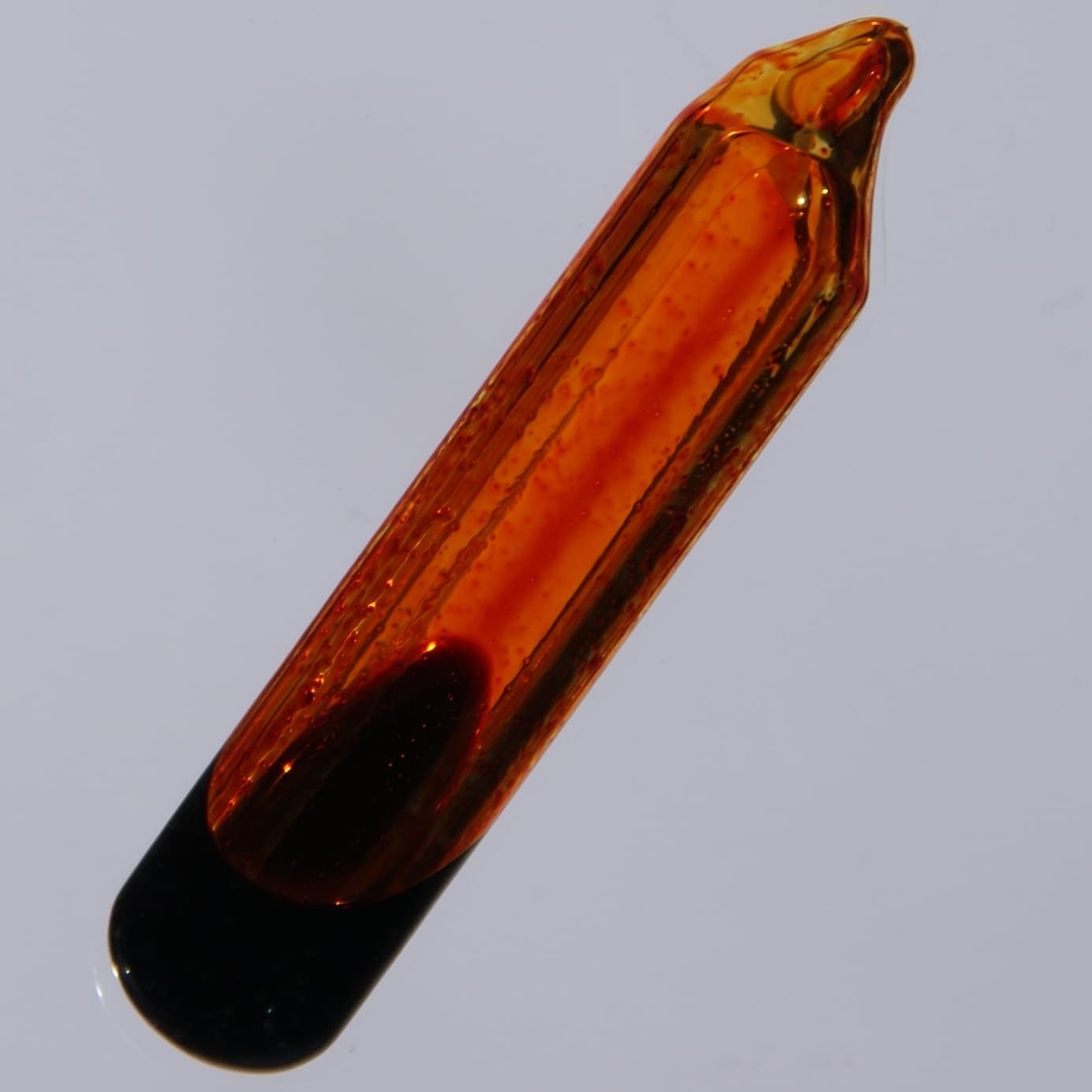
Bromine is [Ar]3d10 4s2 4p5 — the halogen signature of one missing electron. It is less electronegative than chlorine (2.96), so its positive oxidation states are less stable, and +7 perbromate is so hard to make it wasn't synthesized until 1968.
Treating elemental bromine and bromide interchangeably in safety terms. Br2 is a fuming, corrosive red-brown liquid — one of only two liquid elements at room temperature. Br-, by contrast, is so tame it was once prescribed as a sedative ('taking bromide').
Ag+ and Br- pair one-to-one: AgBr. Light kicks an electron from Br- to Ag+, seeding metallic silver specks — the latent image a developer then amplifies.
sodium bromine compound
Sodium ions can balance Br- in simple ionic examples.
calcium bromine compound
Calcium ions can balance common negative Bromine ions.
They don't, exactly — brominated flame retardants bond bromine covalently to carbon (oxidation state -1 formally). Fire heat releases bromine radicals that quench the flame's chain reactions.
Ozonating water that contains natural bromide can oxidize Br- (-1) to bromate BrO3- (+5), a suspected carcinogen — so utilities monitor it. A charge change, courtesy of disinfection, creates the issue.
Same strategy, one row apart: the sanitizer is hypobromous acid (Br +1), which falls to bromide (-1) as it kills microbes. Bromine tolerates hot-tub temperatures better than chlorine's version.
Combine positive and negative ions so the total charge is zero — or let the ionic compound calculator do the crossing for you. The full chart lives on the periodic table with charges.
Charges and element facts on this page are checked against the primary references below. Found an error? Email hello@periodictablewithcharges.com — corrections ship in the next content update. See how this site is edited.