Hard water contains Ca2+. Why does soap scum form?
Soap anions (long-chain carboxylates, 1- each) pair two-to-one with Ca2+, forming an insoluble calcium salt — the scum. Water softeners swap Ca2+ for Na+, whose 1+ soap salts stay dissolved.
Calcium commonly forms Ca2+ in introductory ionic compounds.
| Element | Calcium |
|---|---|
| Symbol | Ca |
| Atomic number | 20 |
| Common ionic charge | +2 |
| Common ions | Ca2+ |
Images are used as visual references; charge rules still depend on the compound.
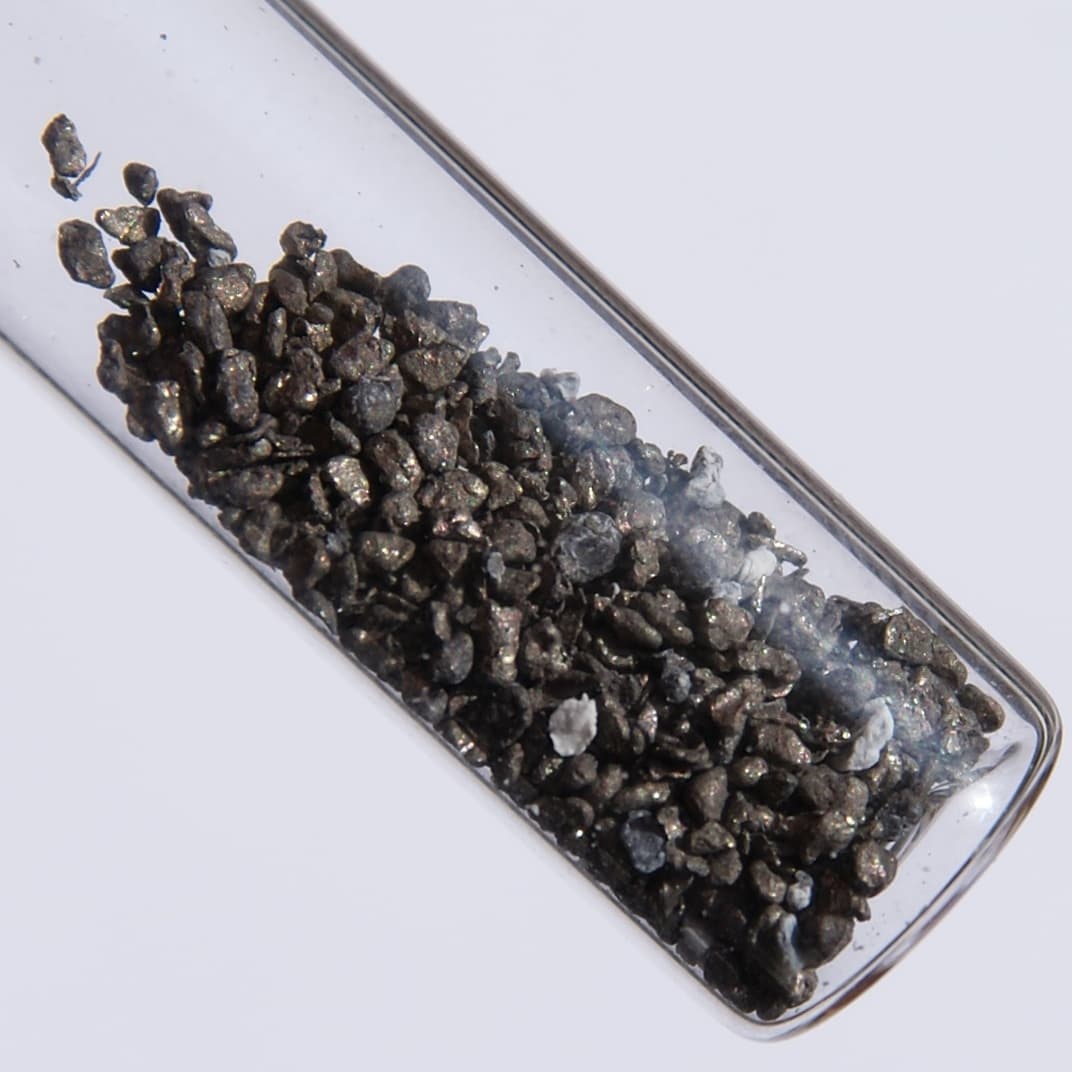
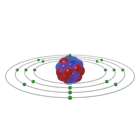
Calcium is [Ar]4s2. Both 4s electrons depart to expose the argon core — the first two ionization energies are affordable (590 and 1,145 kJ/mol), but the third leaps to 4,912 kJ/mol because it would tear into the noble-gas core. So calcium is 2+, never 1+ or 3+.
Writing calcium phosphate as CaPO4. Phosphate is 3-, calcium is 2+; they do not cancel one-to-one. Cross the charges: Ca3(PO4)2. Any calcium formula must make total + equal total -.
Soap anions (long-chain carboxylates, 1- each) pair two-to-one with Ca2+, forming an insoluble calcium salt — the scum. Water softeners swap Ca2+ for Na+, whose 1+ soap salts stay dissolved.
Calcium chloride
Ca2+ balances chloride ions.
Calcium oxide
Calcium can form oxides where total positive and negative charge balances.
No — it is dissolved Ca2+ bound to casein proteins and phosphate. Metallic calcium would react violently with the water in milk. Supplements likewise contain calcium salts, not the metal.
2+, mainly in calcium silicates. When water hits cement, Ca2+ and silicate ions rearrange into the interlocking crystals that make concrete hard.
Same group, same 2+ charge — both make water 'hard' and form insoluble carbonates. Calcium's larger radius (100 pm vs 72 pm) makes its salts generally a bit less soluble, which is why limescale is mostly CaCO3.
Combine positive and negative ions so the total charge is zero — or let the ionic compound calculator do the crossing for you. The full chart lives on the periodic table with charges.
Charges and element facts on this page are checked against the primary references below. Found an error? Email hello@periodictablewithcharges.com — corrections ship in the next content update. See how this site is edited.