Predict the formula of beryllium fluoride.
Be gives 2+, fluoride is F-. Two fluorides per beryllium: BeF2. It is used in nuclear reactor fuel processing.
Beryllium commonly forms Be2+ in introductory ionic compounds.
| Element | Beryllium |
|---|---|
| Symbol | Be |
| Atomic number | 4 |
| Common ionic charge | +2 |
| Common ions | Be2+ |
Images are used as visual references; charge rules still depend on the compound.
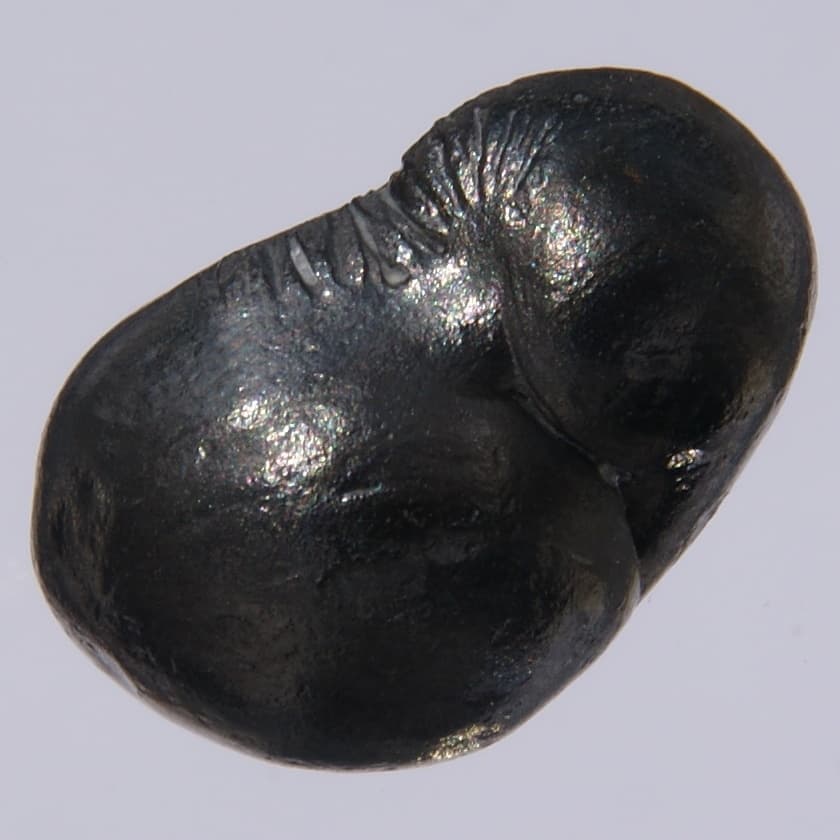
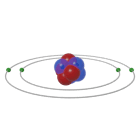
Beryllium's configuration is 1s2 2s2. Removing both 2s electrons exposes the helium core, giving the 2+ assignment. Because the resulting ion would be tiny and doubly charged, it polarizes nearby electron clouds so strongly that its bonds end up partly covalent.
Treating BeCl2 like a typical ionic salt. Molten BeCl2 barely conducts electricity — a giveaway that the bonding is covalent — yet for formula-writing and naming you still use the 2+ assignment.
Be gives 2+, fluoride is F-. Two fluorides per beryllium: BeF2. It is used in nuclear reactor fuel processing.
Beryllium chloride
Be2+ balances chloride ions.
Beryllium oxide
Beryllium can form oxides where total positive and negative charge balances.
Its small size and high charge density create a tough protective oxide layer, and its bonds resist the ionization that drives those reactions in heavier Group 2 metals.
Not really free — in water it exists as [Be(H2O)4]2+, gripping four water molecules tightly. Beryllium compounds are also highly toxic, so this is lab-lecture knowledge, not hands-on.
No stable Be+ compounds exist. The 2s2 pair goes together: beryllium is 2+ or nothing in ordinary chemistry.
Combine positive and negative ions so the total charge is zero — or let the ionic compound calculator do the crossing for you. The full chart lives on the periodic table with charges.
Charges and element facts on this page are checked against the primary references below. Found an error? Email hello@periodictablewithcharges.com — corrections ship in the next content update. See how this site is edited.