Write the formula for lutetium(III) oxide.
Lu3+ with O2- gives Lu2O3 — the densest and highest-melting of the rare-earth sesquioxides, mirroring lutetium metal's own records in the series.
Lutetium commonly forms Lu3+ in introductory ionic compounds.
| Element | Lutetium |
|---|---|
| Symbol | Lu |
| Atomic number | 71 |
| Common ionic charge | +3 |
| Common ions | Lu3+ |
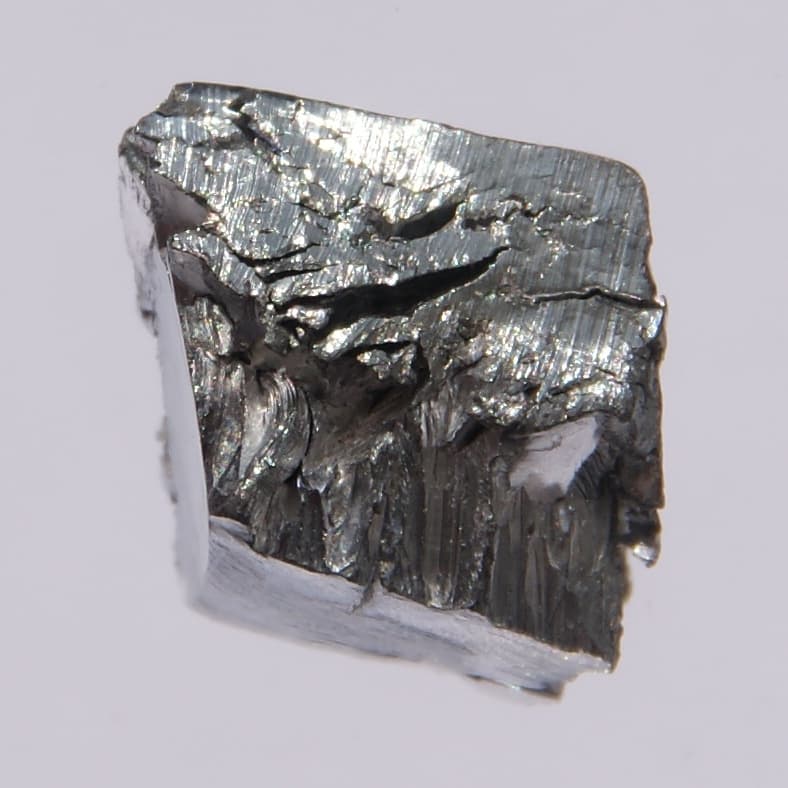
Images are used as visual references; charge rules still depend on the compound.
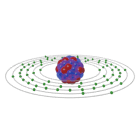
Lutetium is [Xe]4f14 5d1 6s2. The three outer electrons (5d + 6s) leave to give Lu3+ with a sealed f14 core beneath — chemically the tidiest ion in the row. With f electrons locked away, some chemists even argue lutetium belongs in the d-block under scandium and yttrium, its fellow fixed-3+ metals.
This is a classroom reference range, not an exhaustive list of all oxidation states.
Expecting the 'last lanthanide' to be the most exotic. It is the opposite: no +2, no +4, no colored solutions (f14 allows no f-f light absorption — Lu3+ is colorless). If a problem involves lutetium, it is a plain +3 exercise.
Lu3+ with O2- gives Lu2O3 — the densest and highest-melting of the rare-earth sesquioxides, mirroring lutetium metal's own records in the series.
Lutetium chloride
Lu3+ balances chloride ions.
Lutetium oxide
Lutetium can form oxides where total positive and negative charge balances.
An ordinary Lu3+ ion caged in a chelator stapled to a tumor-seeking molecule (like PSMA for prostate cancer). The chemistry parks the ion at the tumor; the nucleus's beta particles do the treating.
Their detector crystals are LSO/LYSO — lutetium silicates (Lu3+) that flash light when gamma rays strike. Tons of lutetium sit quietly in hospital scanners, its high atomic mass stopping the photons.
Among stable elements it is routinely near the top: scarcest of the rare earths and the very last drop out of the separation columns. Price reflects purification agony, not chemical glamour.
Combine positive and negative ions so the total charge is zero — or let the ionic compound calculator do the crossing for you. The full chart lives on the periodic table with charges.
Charges and element facts on this page are checked against the primary references below. Found an error? Email hello@periodictablewithcharges.com — corrections ship in the next content update. See how this site is edited.