Technetium commonly forms Tc4+ Tc7+ in introductory ionic compounds.
Technetium — the lightest element with no stable isotope — favors +7 in pertechnetate (TcO4-), the form used in tens of millions of medical scans yearly, and +4 in TcO2. Every atom of it on Earth is made artificially.
Element
Technetium
Symbol
Tc
Atomic number
43
Common ionic charge
+4, +7
Common ions
Tc4+, Tc7+
Visual reference
Technetium element image and atomic model
Images are used as visual references; charge rules still depend on the compound.
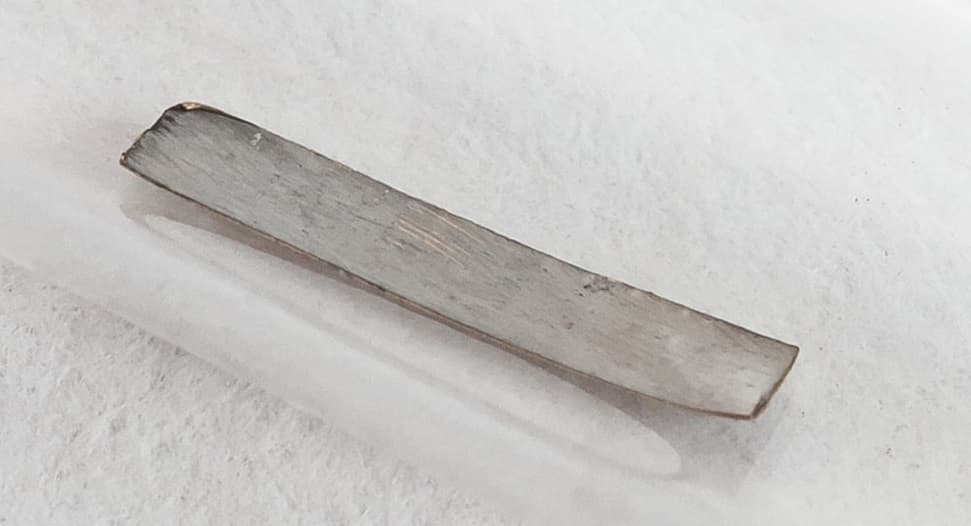
Technetium sample imageGFDL, CC BY-SA 4.0 <https://creativecommons.org/licenses/by-sa/4.0>, via Wikimedia CommonsOriginal image sourceTechnetium Bohr modelAtomic model image from the open Periodic-Table-JSON dataset. It is a simplified electron-shell reference, not a scale drawing.Original Bohr model source
Where Technetium's charge options come from
Technetium is [Kr]4d5 5s2, manganese's group-mate, and copies its states: +7 with all valence electrons engaged (TcO4- parallels MnO4-) and the intermediate +4 oxide. Its chemistry was predicted by Mendeleev decades before anyone could make an atom of it.
This is a classroom reference range, not an exhaustive list of all oxidation states.
The trap in Technetium problems
Assuming radioactivity changes charge rules. Nuclear instability lives in the nucleus; technetium's electrons follow ordinary group-7 chemistry. A pertechnetate ion behaves like a permanganate ion that happens to have an unstable core.
Worked example: Tc in a formula problem
Confirm technetium's oxidation state in the medical imaging ion TcO4-.
Four oxygens contribute -8; the ion's overall charge is -1, so Tc = +7. Hospitals inject Tc-99m in this form because the body routes pertechnetate predictably while its gamma rays map organs.
Tc4+ and Tc7+ in real compounds
TcCl4
Technetium chloride
Tc4+ balances chloride ions.
Tc2O3
Technetium oxide
Technetium can form oxides where total positive and negative charge balances.
Questions students ask about technetium
Why is Tc-99m so common in hospitals if technetium barely exists in nature?
It is 'milked' weekly from molybdenum-99 generators. Its 6-hour half-life and clean gamma emission are ideal: image, decay, gone — with the +7 pertechnetate chemistry making it easy to attach to targeting molecules.
Does any technetium occur naturally at all?
Vanishing traces in uranium ores from spontaneous fission. Essentially every gram in existence came from reactors — the first artificial element, as its name ('technetos', artificial) records.
What charge does technetium take in bone scans?
Still starting from +7 pertechnetate, it is reduced (often toward +4) and bound to phosphonate carriers that deposit wherever bone is actively rebuilding — lighting up fractures and lesions.