Neptunium commonly forms Np3+ Np4+ Np5+ Np6+ in introductory ionic compounds.
Neptunium — the first transuranium element — runs +3, +4, +5, and +6, each a different color in solution, with +5 (as the neptunyl ion NpO2+) the most stable. That +5 preference is unique among early actinides and defines neptunium's environmental behavior.
Element
Neptunium
Symbol
Np
Atomic number
93
Common ionic charge
+3, +4, +5, +6
Common ions
Np3+, Np4+, Np5+, Np6+
Visual reference
Neptunium element image and atomic model
Images are used as visual references; charge rules still depend on the compound.
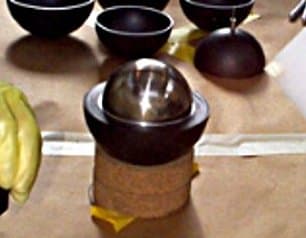
Neptunium sample imageLos Alamos National Laboratory,, Public domain, via Wikimedia CommonsOriginal image sourceNeptunium Bohr modelAtomic model image from the open Periodic-Table-JSON dataset. It is a simplified electron-shell reference, not a scale drawing.Original Bohr model source
The electron story behind Neptunium's charge
Neptunium is [Rn]5f4 6d1 7s2, sitting between uranium (+6-loving) and plutonium (+4-loving); its compromise favorite is +5. Like uranium it caps its high states in 'yl' oxo-cations — NpO2+ mirrors uranyl but with one less positive charge and stubbornly weak complexing habits.
This is a classroom reference range, not an exhaustive list of all oxidation states.
The assumption that trips people up on Neptunium
Treating neptunium as a lab-only footnote. Np-237 (half-life 2.1 million years) is a principal long-term heat and dose driver of spent nuclear fuel, and the mobility of NpO2+ — which sticks poorly to minerals — is a headline problem for waste repositories. The +5 charge is a policy issue.
Worked example: Np in a formula problem
Assign neptunium's oxidation state in the neptunyl ion, NpO2+.
Two O at -4 with overall charge +1 gives Np = +5. Compare uranyl UO2 2+ (U = +6): same architecture, one electron more retained — the fingerprint of moving one box right in the actinide row.
Np3+ and Np4+ and Np5+ and Np6+ in real compounds
NpCl3
Neptunium chloride
Np3+ balances chloride ions.
Np2O3
Neptunium oxide
Neptunium can form oxides where total positive and negative charge balances.
Questions students ask about neptunium
Where did neptunium's name and position come from?
Uranium was named for Uranus; the next element (1940, Berkeley) took Neptune, the next planet out — and plutonium then followed with Pluto. The bottom row of the table doubles as a solar-system tour.
What are neptunium's solution colors?
Roughly: Np3+ purple-blue, Np4+ yellow-green, NpO2+ green, NpO2 2+ pink — four charges you can literally tell apart by eye, a favorite demonstration of actinide redox richness (in licensed labs).
Does neptunium have any use beyond research?
Np-237 targets are irradiated to breed Pu-238, the heat source powering deep-space probes — neptunium as feedstock for the batteries of Voyager's successors.