Predict the formula of niobium(V) oxide.
Nb5+ with O2- crosses to Nb2O5 — two niobiums (+10) balancing five oxides (-10). This oxide is the raw material for lithium niobate, the crystal inside many phone signal filters.
Niobium commonly forms Nb3+ Nb5+ in introductory ionic compounds.
| Element | Niobium |
|---|---|
| Symbol | Nb |
| Atomic number | 41 |
| Common ionic charge | +3, +5 |
| Common ions | Nb3+, Nb5+ |
Images are used as visual references; charge rules still depend on the compound.
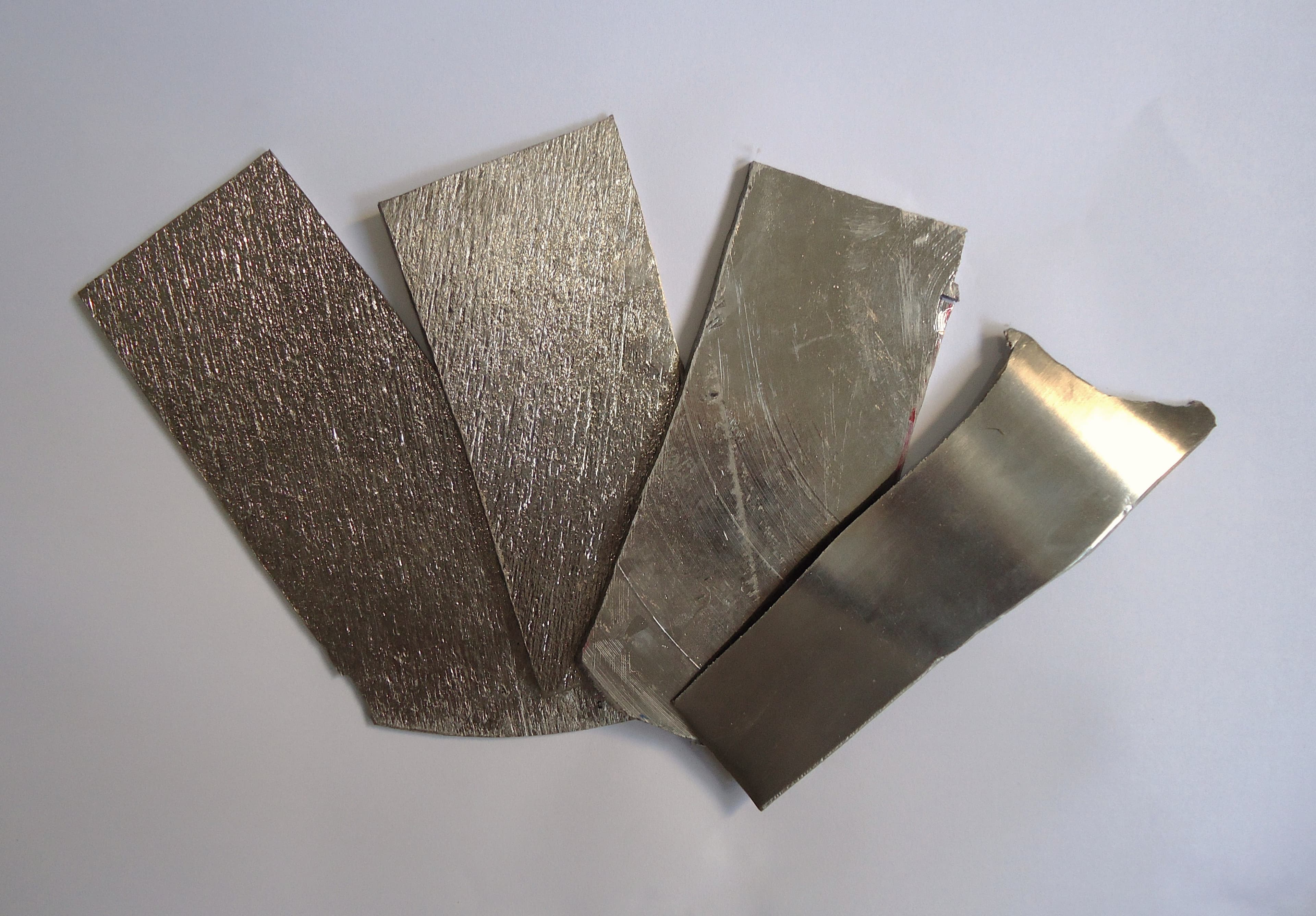
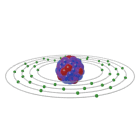
Niobium is [Kr]4d4 5s1. Committing all five outer electrons reaches the krypton core, making +5 the resting state, much as vanadium above it favors +5. The intermediate states are real but belong to inorganic-chemistry electives, not intro courses.
This is a classroom reference range, not an exhaustive list of all oxidation states.
Assuming the anodized colors on niobium rings come from colored ions. The metal stays neutral; a transparent Nb2O5 layer of controlled thickness creates the colors by light interference — the same physics as oil films on water.
Nb5+ with O2- crosses to Nb2O5 — two niobiums (+10) balancing five oxides (-10). This oxide is the raw material for lithium niobate, the crystal inside many phone signal filters.
Niobium chloride
Nb3+ balances chloride ions.
Niobium oxide
Niobium can form oxides where total positive and negative charge balances.
Niobium-titanium and niobium-tin alloys (neutral metals, charge 0) superconduct below about 10 K. MRI machines and particle accelerators wind kilometers of it — no ionic chemistry involved.
They sit in the same group, both defaulting to +5, with nearly identical ionic radii — a lanthanide-contraction coincidence that made them notoriously hard to separate; their shared ore even yielded intertwined names (niobium was once 'columbium').
Because of its lack of released charge, yes: the sealed Nb2O5 surface dissolves essentially no ions into skin, unlike nickel, whose released Ni2+ triggers allergies.
Combine positive and negative ions so the total charge is zero — or let the ionic compound calculator do the crossing for you. The full chart lives on the periodic table with charges.
Charges and element facts on this page are checked against the primary references below. Found an error? Email hello@periodictablewithcharges.com — corrections ship in the next content update. See how this site is edited.