Assign germanium's oxidation state in GeH4 (germane) and GeO2.
In GeH4, H is +1, so Ge = -4 — the metalloid can go negative with hydrogen, mirroring methane. In GeO2, O is -2, so Ge = +4. Partner electronegativity decides the sign.
Germanium commonly forms Ge2+ Ge4+ in introductory ionic compounds.
| Element | Germanium |
|---|---|
| Symbol | Ge |
| Atomic number | 32 |
| Common ionic charge | +2, +4 |
| Common ions | Ge2+, Ge4+ |
Images are used as visual references; charge rules still depend on the compound.
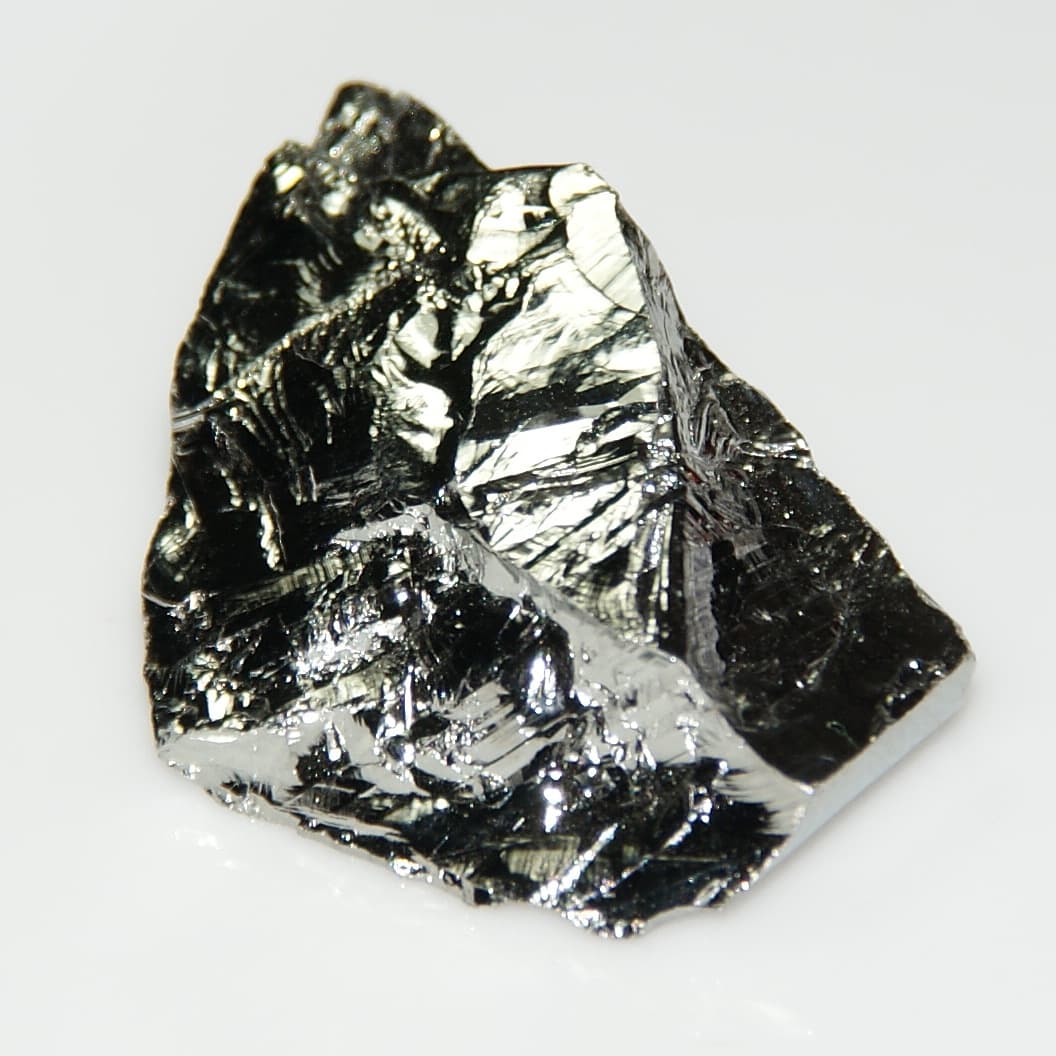
Germanium is [Ar]3d10 4s2 4p2, carbon's group two rows down. All four outer electrons engage for the +4 state. Down this group the s-pair grows lazier about bonding (the 'inert pair effect'), so +2 begins appearing at germanium — a preview of tin, where the two states genuinely compete.
Expecting germanium to form ionic salts like a metal. It is a metalloid: GeCl4 is a volatile liquid, not a crystal lattice of Ge4+ ions. Use +4 for bookkeeping and formula prediction, not as a literal ion.
In GeH4, H is +1, so Ge = -4 — the metalloid can go negative with hydrogen, mirroring methane. In GeO2, O is -2, so Ge = +4. Partner electronegativity decides the sign.
Germanium chloride
Ge2+ balances chloride ions.
Germanium oxide
Germanium can form oxides where total positive and negative charge balances.
The first transistor (1947) was germanium at charge 0 — a neutral semiconductor crystal. Silicon later displaced it for handling heat better, but Ge still appears in high-speed chips and infrared optics.
Marketed supplements contain germanium-carbon compounds (Ge formally +4). Regulators have flagged them for kidney toxicity — no biological need for germanium exists, at any charge.
Its middling electronegativity (2.01) and four valence electrons mean it neither gives electrons away like tin nor hoards them like carbon. The staircase on the periodic table runs right through its box.
Combine positive and negative ions so the total charge is zero — or let the ionic compound calculator do the crossing for you. The full chart lives on the periodic table with charges.
Charges and element facts on this page are checked against the primary references below. Found an error? Email hello@periodictablewithcharges.com — corrections ship in the next content update. See how this site is edited.