What is carbon's oxidation state in CO2 versus CH4?
In CO2, each O is -2, so C = +4. In CH4, each H is +1, so C = -4. Same element, opposite extremes — set by whether carbon's partner pulls electrons harder than it does.
Carbon commonly forms C4- C4+ in introductory ionic compounds.
| Element | Carbon |
|---|---|
| Symbol | C |
| Atomic number | 6 |
| Common ionic charge | -4, +4 |
| Common ions | C4-, C4+ |
Images are used as visual references; charge rules still depend on the compound.

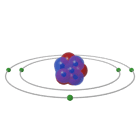
Carbon sits dead center in period 2 with a 2s2 2p2 configuration. Gaining four electrons or losing four are both energetically absurd, so carbon covers the middle ground: four covalent bonds, every time, with the oxidation state depending on how electronegative its partners are.
Writing C4+ or C4- as real ions in ionic compounds. Even in carbides like Al4C3, which we formally treat as containing C4-, the bonding is far from purely ionic. Use the numbers for electron bookkeeping, not as literal charges.
In CO2, each O is -2, so C = +4. In CH4, each H is +1, so C = -4. Same element, opposite extremes — set by whether carbon's partner pulls electrons harder than it does.
sodium carbon compound
Sodium ions can balance C4- in simple ionic examples.
calcium carbon compound
Calcium ions can balance common negative Carbon ions.
The -2 belongs to the whole polyatomic ion, not to carbon. Within carbonate, carbon's oxidation state is +4 (three oxygens at -2 give -6; -6 + 4 = -2 overall).
Neither does silicon, in truth. Removing four electrons from any small atom takes more energy than bond formation can pay back. Both elements bond covalently instead.
No — diamond is pure carbon at oxidation state 0, every atom sharing four bonds with neighbors. Same for graphite and graphene.
Combine positive and negative ions so the total charge is zero — or let the ionic compound calculator do the crossing for you. The full chart lives on the periodic table with charges.
Charges and element facts on this page are checked against the primary references below. Found an error? Email hello@periodictablewithcharges.com — corrections ship in the next content update. See how this site is edited.