Predict the formula of sodium astatide by group logic.
Na+ with At- gives NaAt, on the pattern of NaCl, NaBr, NaI. Tracer chemistry confirms astatide co-precipitates with iodide — the group prediction holds at the scale of thousands of atoms.
Astatine commonly forms At- At+ in introductory ionic compounds.
| Element | Astatine |
|---|---|
| Symbol | At |
| Atomic number | 85 |
| Common ionic charge | -1, +1 |
| Common ions | At-, At+ |
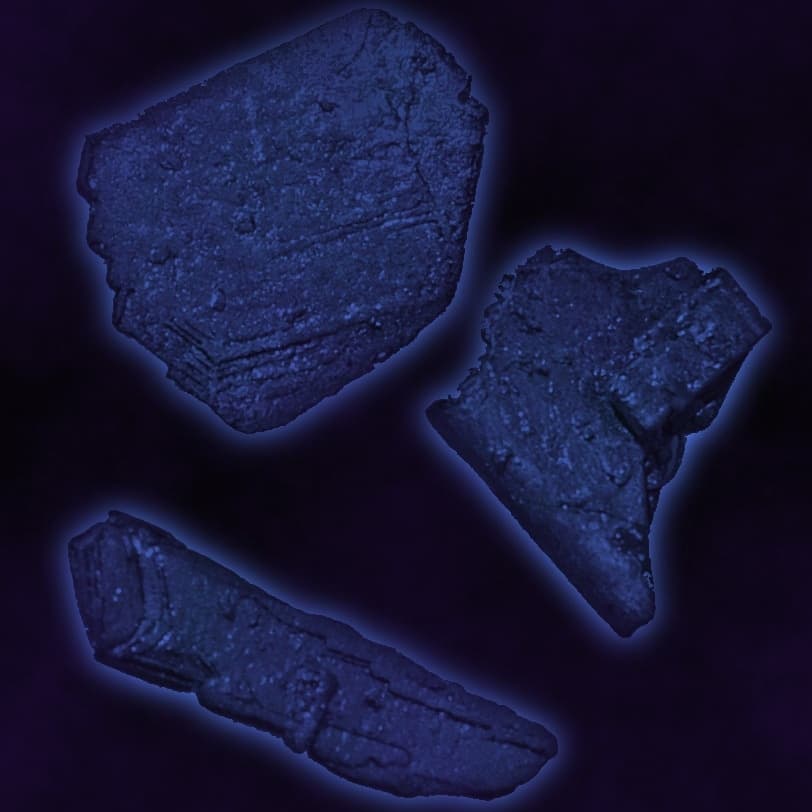
Images are used as visual references; charge rules still depend on the compound.
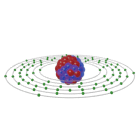
Astatine is [Xe]4f14 5d10 6s2 6p5 — one electron short, the halogen signature. But metallic character has crept so far down the group that astatide (At-) forms less eagerly than iodide, and calculations suggest bulk astatine (could it ever be assembled) might be a metal rather than an I2-like solid.
Writing confident astatine chemistry as if it were bench-tested. No one has ever seen astatine — any visible sample would vaporize itself with decay heat. Its -1/+1 states are established through carrier-free radiotracer work, a different epistemology than the rest of the table.
Na+ with At- gives NaAt, on the pattern of NaCl, NaBr, NaI. Tracer chemistry confirms astatide co-precipitates with iodide — the group prediction holds at the scale of thousands of atoms.
sodium astatine compound
Sodium ions can balance At- in simple ionic examples.
calcium astatine compound
Calcium ions can balance common negative Astatine ions.
At-211's alpha particles deposit lethal energy across just a few cell diameters — ideal for killing tagged cancer cells one by one. Its halogen -1 chemistry lets chemists bolt it onto antibodies the way they would iodine.
Uranium and thorium decay chains continuously mint fresh atoms (half-lives of hours), maintaining a planet-wide steady state of about an ounce. Every atom you could point to is younger than a day.
Extrapolation says darker and more metallic, but the honest answer is that no one will ever collect enough to see. Astatine is the element chemistry knows only statistically.
Combine positive and negative ions so the total charge is zero — or let the ionic compound calculator do the crossing for you. The full chart lives on the periodic table with charges.
Charges and element facts on this page are checked against the primary references below. Found an error? Email hello@periodictablewithcharges.com — corrections ship in the next content update. See how this site is edited.