Write the formulas for samarium(III) oxide and samarium(II) iodide.
Sm3+ with O2- gives Sm2O3; Sm2+ with two I- gives SmI2. One element, two charge states, two different subscript patterns — the numeral in the name is doing real work.
Samarium commonly forms Sm2+ Sm3+ in introductory ionic compounds.
| Element | Samarium |
|---|---|
| Symbol | Sm |
| Atomic number | 62 |
| Common ionic charge | +2, +3 |
| Common ions | Sm2+, Sm3+ |
Images are used as visual references; charge rules still depend on the compound.
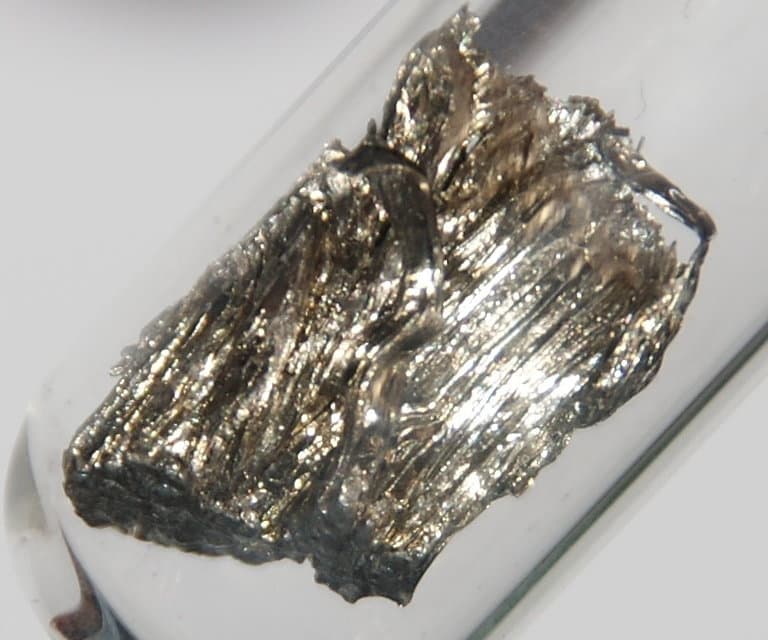
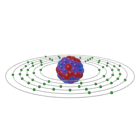
Samarium is [Xe]4f6 6s2. The standard +3 gives f5; stopping at +2 gives f6, close enough to the half-filled-shell sweet spot (f7) to borrow some stability. That is why Sm2+ is isolable while most lanthanide 2+ states are not — though it remains a powerful reducing agent, always ready to climb back to +3.
This is a classroom reference range, not an exhaustive list of all oxidation states.
Treating SmI2 like an ordinary salt. Kagan's reagent exists to give away an electron (Sm2+ → Sm3+); it must be handled under inert gas because air oxidizes it instantly. Its instability is its entire usefulness.
Sm3+ with O2- gives Sm2O3; Sm2+ with two I- gives SmI2. One element, two charge states, two different subscript patterns — the numeral in the name is doing real work.
Samarium chloride
Sm2+ balances chloride ions.
Samarium oxide
Samarium can form oxides where total positive and negative charge balances.
SmCo5 alloys hold their magnetization past 300 °C, where NdFeB fades. Jet engines and military hardware pay the premium — the samarium is neutral metal, its f electrons anchoring the magnetism.
As a phosphonate complex (Sm3+), it concentrates in bone tumors and irradiates them with beta particles — the standard +3 chemistry providing the delivery vehicle for the therapeutic nucleus.
Charge is stored chemistry: the extra electron on Sm2+ sits high in energy and transfers to organic substrates one at a time — enabling radical reactions that two-electron reagents cannot perform.
Combine positive and negative ions so the total charge is zero — or let the ionic compound calculator do the crossing for you. The full chart lives on the periodic table with charges.
Charges and element facts on this page are checked against the primary references below. Found an error? Email hello@periodictablewithcharges.com — corrections ship in the next content update. See how this site is edited.