Write the formula for nickel(II) hydroxide, used in rechargeable battery electrodes.
Ni2+ and OH-: Ni(OH)2. During charging it oxidizes to NiOOH (nickel +3); during discharge it returns to Ni(OH)2 — the +2/+3 shuttle stores the energy.
Nickel commonly forms Ni2+ Ni3+ in introductory ionic compounds.
| Element | Nickel |
|---|---|
| Symbol | Ni |
| Atomic number | 28 |
| Common ionic charge | +2, +3 |
| Common ions | Ni2+, Ni3+ |
Images are used as visual references; charge rules still depend on the compound.
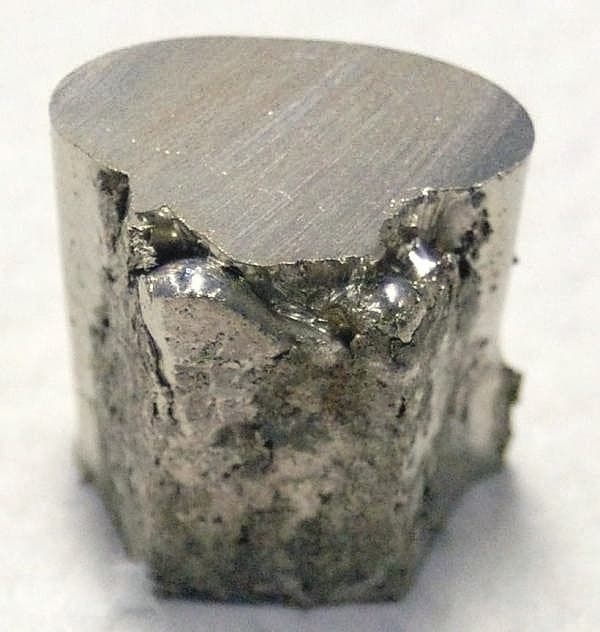
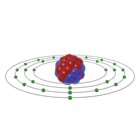
Nickel is [Ar]3d8 4s2, and shedding the 4s pair to give d8 Ni2+ is far easier than digging into the d shell. The d8 arrangement is comfortable enough that nickel, unlike its neighbors iron and cobalt, rarely bothers with +3 outside engineered materials.
This is a classroom reference range, not an exhaustive list of all oxidation states.
Adding a Roman numeral reflexively: 'nickel(II) chloride' is technically fine, but on naming tests 'nickel chloride' is usually accepted precisely because +2 is nickel's only common state. Know your instructor's convention — and never invent NiCl3.
Ni2+ and OH-: Ni(OH)2. During charging it oxidizes to NiOOH (nickel +3); during discharge it returns to Ni(OH)2 — the +2/+3 shuttle stores the energy.
Nickel chloride
Ni2+ balances chloride ions.
Nickel oxide
Nickel can form oxides where total positive and negative charge balances.
No — coins are a neutral copper-nickel alloy (only 25% nickel!). Ionic Ni2+ appears when the surface corrodes or dissolves, which is also what triggers nickel-allergy skin reactions to jewelry.
Ni2+ in water exists as [Ni(H2O)6]2+, whose d8 electrons absorb red and blue light, letting green pass. Swap water for ammonia and the solution turns violet-blue — same +2 charge, different ligands.
Zero. Hydrogenation catalysts use finely divided nickel metal; H2 and vegetable-oil molecules react on its neutral surface. No ions involved — a reminder that metals do chemistry at charge 0 too.
Combine positive and negative ions so the total charge is zero — or let the ionic compound calculator do the crossing for you. The full chart lives on the periodic table with charges.
Charges and element facts on this page are checked against the primary references below. Found an error? Email hello@periodictablewithcharges.com — corrections ship in the next content update. See how this site is edited.