Write the formula for gadolinium(III) oxide.
Gd3+ with O2- crosses to Gd2O3 — used in optical coatings and as a neutron absorber, since gadolinium nuclei have the largest thermal-neutron appetite of any stable element.
Gadolinium commonly forms Gd3+ in introductory ionic compounds.
| Element | Gadolinium |
|---|---|
| Symbol | Gd |
| Atomic number | 64 |
| Common ionic charge | +3 |
| Common ions | Gd3+ |
Images are used as visual references; charge rules still depend on the compound.
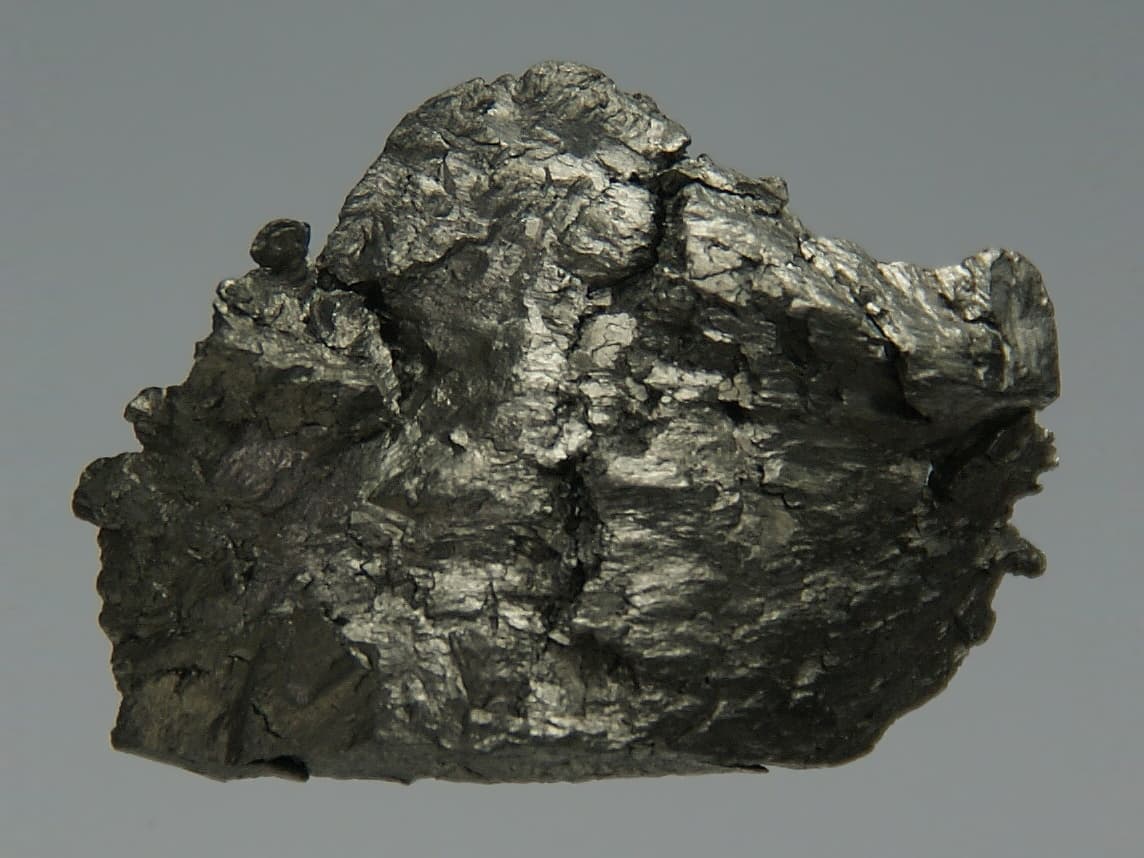
Gadolinium is [Xe]4f7 5d1 6s2. Losing the 5d and 6s electrons (three total) leaves f7 — maximum unpaired spins, maximum exchange stability. Neither +2 nor +4 tempts it; gadolinium is the lanthanide +3 rule at its purest.
This is a classroom reference range, not an exhaustive list of all oxidation states.
Thinking MRI contrast means gadolinium is radioactive. It is not — MRI uses no ionizing radiation at all. Gd3+'s seven unpaired electrons simply make nearby water protons relax faster, brightening tissue. The safety concern is different: free Gd3+ is toxic (it mimics Ca2+), so the ion is caged in a chelate that escorts it out through the kidneys.
Gd3+ with O2- crosses to Gd2O3 — used in optical coatings and as a neutron absorber, since gadolinium nuclei have the largest thermal-neutron appetite of any stable element.
Gadolinium chloride
Gd3+ balances chloride ions.
Gadolinium oxide
Gadolinium can form oxides where total positive and negative charge balances.
Each f orbital takes one electron before any pairs up; f7 fills all seven singly. Unpaired spins add up like tiny aligned magnets, giving Gd3+ its record magnetic moment among common ions.
Gd2O3 mixed into fuel acts as a 'burnable poison': its nuclei swallow excess neutrons early in the fuel cycle. That is nuclear appetite, unrelated to its 3+ chemistry — the same element serving two sciences.
It is ferromagnetic just below room temperature (Curie point ~19 °C) — you can watch a gadolinium sample fall off a magnet as it warms in your hand. The neutral metal's f7 spins are the same ones that power the ion's magnetism.
Combine positive and negative ions so the total charge is zero — or let the ionic compound calculator do the crossing for you. The full chart lives on the periodic table with charges.
Charges and element facts on this page are checked against the primary references below. Found an error? Email hello@periodictablewithcharges.com — corrections ship in the next content update. See how this site is edited.