Write the formula for iridium(IV) oxide, the electrode workhorse.
Ir4+ with two O2-: IrO2. Coated on titanium, it makes oxygen-evolving anodes for green-hydrogen electrolyzers — scarce Ir4+ being one of that industry's real bottlenecks.
Iridium commonly forms Ir3+ Ir4+ in introductory ionic compounds.
| Element | Iridium |
|---|---|
| Symbol | Ir |
| Atomic number | 77 |
| Common ionic charge | +3, +4 |
| Common ions | Ir3+, Ir4+ |
Images are used as visual references; charge rules still depend on the compound.
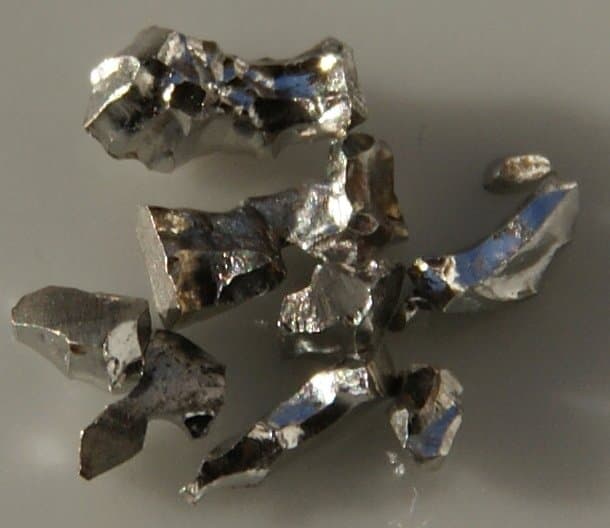
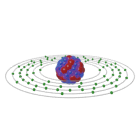
Iridium is [Xe]4f14 5d7 6s2. The +3 state's low-spin d6 configuration is the same rock-solid arrangement rhodium enjoys; +4 (d5) follows close behind. Higher states up to a laboratory-curiosity +9 — the highest formal oxidation state ever observed — exist for completeness' sake.
This is a classroom reference range, not an exhaustive list of all oxidation states.
Reading 'iridium layer' in dinosaur-extinction articles as a compound layer. The K-Pg boundary's iridium is elemental metal dust delivered by the asteroid — Earth's crust is iridium-poor because the molten young planet drained it into the core alongside iron.
Ir4+ with two O2-: IrO2. Coated on titanium, it makes oxygen-evolving anodes for green-hydrogen electrolyzers — scarce Ir4+ being one of that industry's real bottlenecks.
Iridium chloride
Ir3+ balances chloride ions.
Iridium oxide
Iridium can form oxides where total positive and negative charge balances.
The gas-phase ion IrO4+ (2014) holds the record: nine electrons' worth of formal oxidation. It exists fleetingly in spectrometers, a demonstration of the d-block's outer limits, not shelf chemistry.
Neutral iridium keeps its integrity above 2,000 °C in oxidizing melts where platinum sags. Sapphire boules for watch faces and LED wafers are pulled from iridium ware.
Ir3+ complexes are the phosphorescent emitters that made efficient OLED colors possible — the heavy ion's spin-orbit coupling unlocks light from states organic molecules waste as heat.
Combine positive and negative ions so the total charge is zero — or let the ionic compound calculator do the crossing for you. The full chart lives on the periodic table with charges.
Charges and element facts on this page are checked against the primary references below. Found an error? Email hello@periodictablewithcharges.com — corrections ship in the next content update. See how this site is edited.