A worksheet asks for the ion helium forms in ionic compounds. What do you write?
Write 'none.' Helium is a noble gas with a complete shell; it is the reference point other elements try to reach, not an ion former.
Helium does not have a common simple ionic charge in introductory chemistry.
| Element | Helium |
|---|---|
| Symbol | He |
| Atomic number | 2 |
| Common ionic charge | none listed |
| Common ions | none listed |
Images are used as visual references; charge rules still depend on the compound.
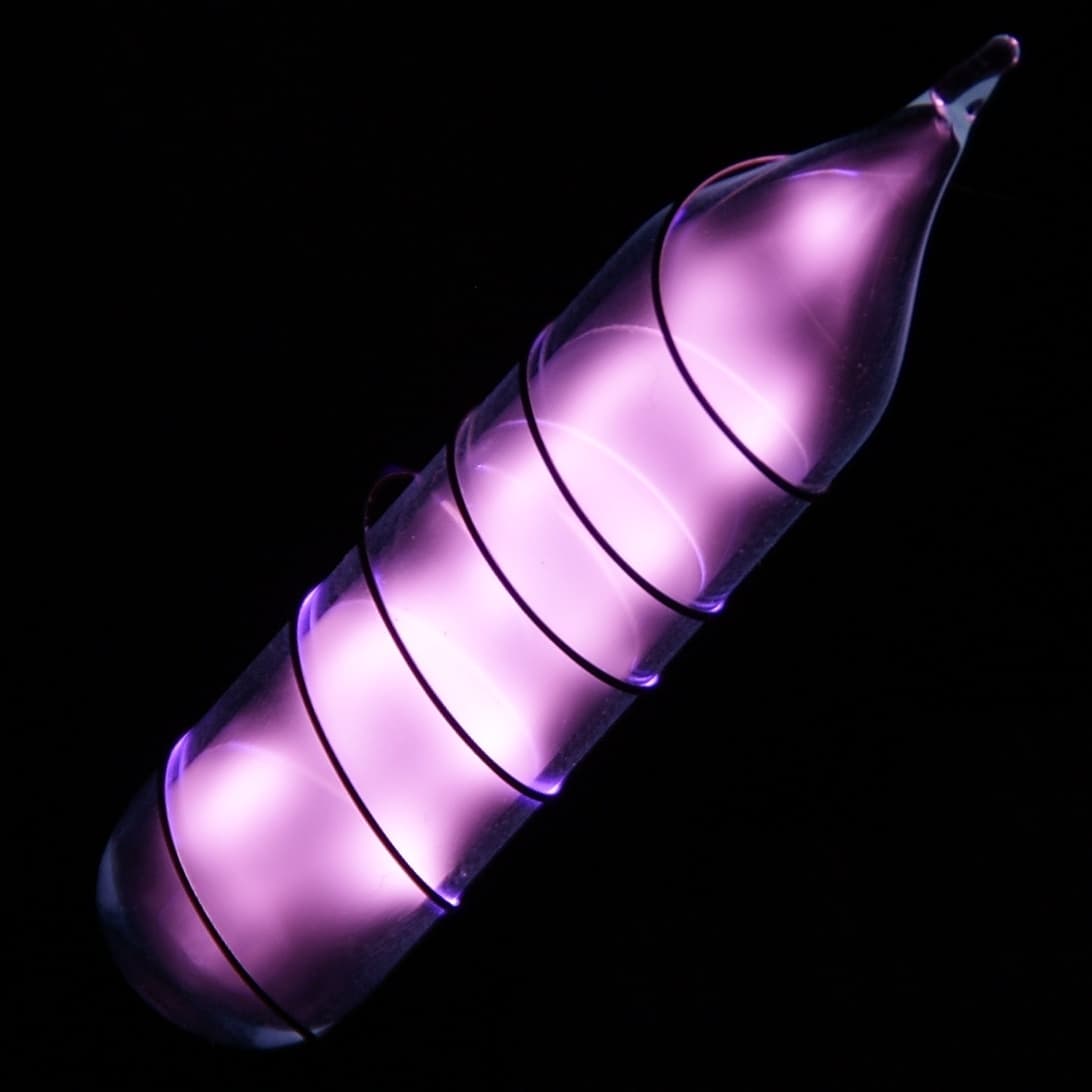
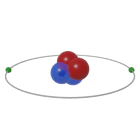
With two electrons filling the tiny 1s orbital, helium has the highest first ionization energy of any element (2,372 kJ/mol). Removing an electron costs far too much energy for ordinary chemistry, and there is no room to add one.
No common simple ion is listed; verify advanced oxidation-state chemistry with a primary reference.
Confusing He+ seen in physics (plasma, mass spectrometry) with chemistry. He+ exists in ionized gases and stars, but it is not a chemical ion — no helium salt or helium molecule sits on any lab shelf.
Write 'none.' Helium is a noble gas with a complete shell; it is the reference point other elements try to reach, not an ion former.
Group 18 collects elements with full outer shells. For helium the outer shell is 1s, which is full at two electrons — chemically it behaves exactly like the heavier noble gases.
No. Even fluorine, the most aggressive electron-taker, cannot pull an electron from helium. Xenon reacts because its outer electrons are much farther from the nucleus.
In elemental form it is 0, and since it forms no compounds, 0 is the only value it ever takes.
Combine positive and negative ions so the total charge is zero — or let the ionic compound calculator do the crossing for you. The full chart lives on the periodic table with charges.
Charges and element facts on this page are checked against the primary references below. Found an error? Email hello@periodictablewithcharges.com — corrections ship in the next content update. See how this site is edited.