Write the formula for hafnium(IV) oxide, the chip-industry 'high-k' dielectric.
Hf4+ with O2- crosses to HfO2. Around 2007, processors swapped SiO2 for HfO2 gate layers — a charge-4 oxide quietly enabling every phone in your pocket.
Hafnium commonly forms Hf4+ in introductory ionic compounds.
| Element | Hafnium |
|---|---|
| Symbol | Hf |
| Atomic number | 72 |
| Common ionic charge | +4 |
| Common ions | Hf4+ |
Images are used as visual references; charge rules still depend on the compound.
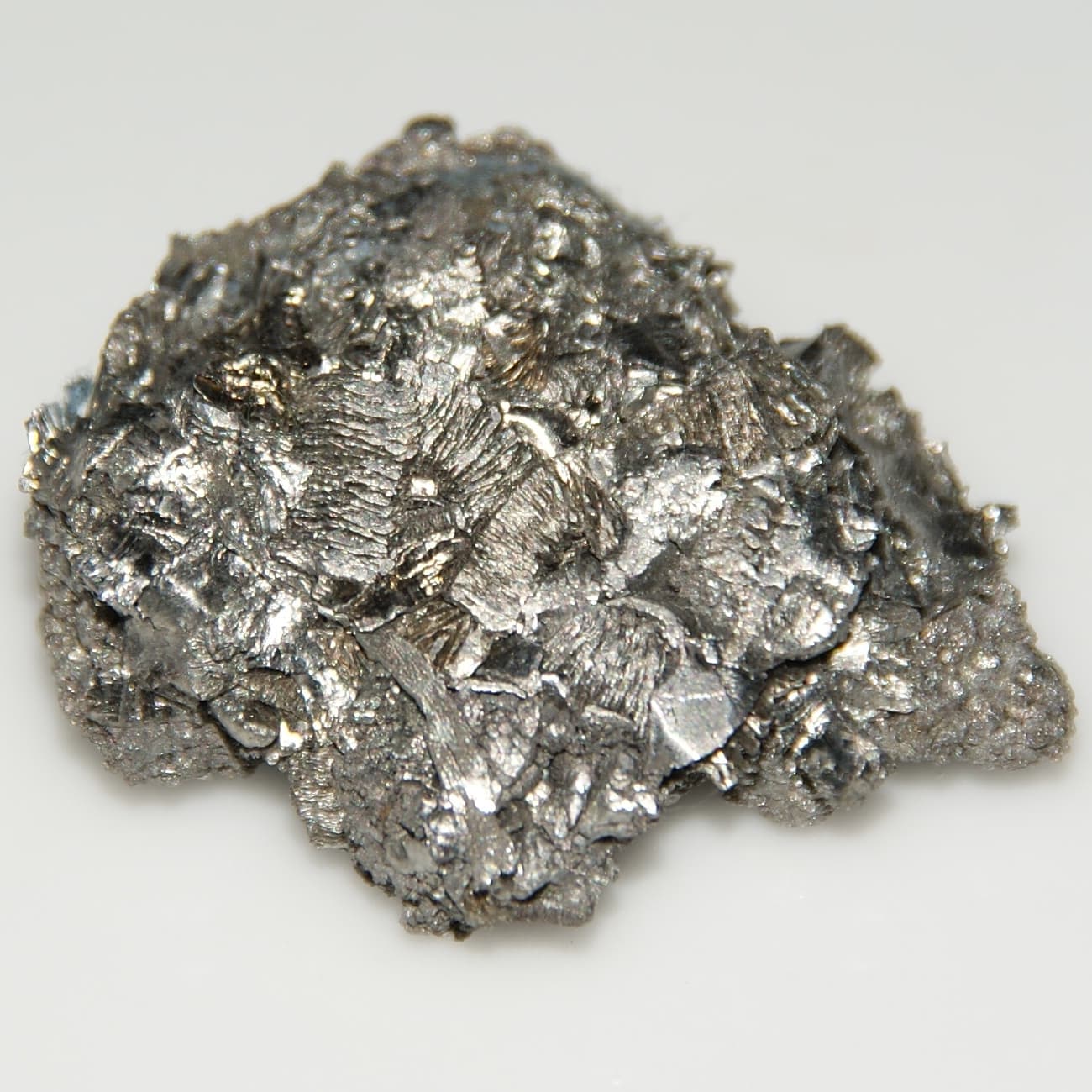
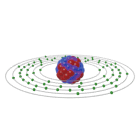
Hafnium is [Xe]4f14 5d2 6s2 — four removable outer electrons over a filled-f core, giving Hf4+. The lanthanide contraction shrinks hafnium to almost exactly zirconium's size, so same charge + same radius = same chemistry, and ores never distinguish them.
This is a classroom reference range, not an exhaustive list of all oxidation states.
Assuming twins are interchangeable everywhere. In nuclear reactors they are opposites: zirconium lets neutrons pass (fuel cladding), hafnium devours them (control rods). The +4 chemistry matches; the nuclei disagree completely — which is precisely why reactor-grade zirconium must have its hafnium scrubbed out.
Hf4+ with O2- crosses to HfO2. Around 2007, processors swapped SiO2 for HfO2 gate layers — a charge-4 oxide quietly enabling every phone in your pocket.
Hafnium chloride
Hf4+ balances chloride ions.
Hafnium oxide
Hafnium can form oxides where total positive and negative charge balances.
It hid inside zirconium minerals as a perfect chemical understudy — same +4, same radius. Only X-ray spectroscopy, which reads the nucleus's charge directly, finally told them apart.
HfC and Hf-Ta carbides hold the records for highest melting points of any known compounds (approaching 4,000 °C) — rocket-nozzle territory. Formally Hf4+ paired with carbide.
+3 halides exist for specialists, but no aqueous or practical chemistry uses them. On any exam or datasheet, hafnium is +4.
Combine positive and negative ions so the total charge is zero — or let the ionic compound calculator do the crossing for you. The full chart lives on the periodic table with charges.
Charges and element facts on this page are checked against the primary references below. Found an error? Email hello@periodictablewithcharges.com — corrections ship in the next content update. See how this site is edited.